




At Be Albright International School, we believe that a good education is not just about “teaching books” but about “instilling life skills, creativity, and the ability to adapt” so that children can grow in a constantly changing world. Therefore, we choose to use the American curriculum as a foundation and strengthen it with the Whole Brain Development approach to create a sustainable thinking system.
We believe the future world requires more than just knowledge in books. The American curriculum best answers this need because it emphasizes practicality — being usable in real life.
Strengths of the American Curriculum:
Provides opportunities for children to learn diverse subjects, without rushing to choose a stream too early.
Connects knowledge across disciplines (STEAM, Art, Language, Communication).
Learning through projects and hands-on experience (Project-Based Learning).
Emphasizes critical thinking, problem-solving, and creativity rather than memorization.
Limitations of Early Specialization (Other Systems):
Children may burn out or not truly know what they like.
It is difficult to change study paths or careers.
Lack of all-around skills, such as communication and working with others.
A comparison table of learning dimensions and Whole Brain Development between Be Albright, the British Curriculum, and IB.
Flexible, with a cognitive development sequence designed for both academics and the brain.
Clear academic structure and sequential steps.
Conceptual framework and inquiry-based learning.
Developing thinking, deep understanding, and real-world application.
Academic expertise and subject precision.
Conceptual understanding and global awareness.
Explicitly developed through academic design and Mind Mapping systems.
Emphasizes academic discipline and rigor.
Developed through various conceptual frameworks.
Developed through problem-solving, application, and reasoning.
Developed through academic rigor and precision.
Developed through inquiry and analysis.
Developed through student-centered exploration.
Exists but is secondary to the main academic structure.
The core strength of the inquiry-based model.
Integrated into all subjects through Mind Mapping and projects.
Exists but is secondary to academic priorities.
High importance placed on creative expression.
Explicitly developed through planning systems and independent learning.
Developed through discipline and expectations according to the structure.
Developed through independent inquiry and reflection.
Focuses on comprehension, communication, and conceptual understanding.
Focuses on Phonics, systematic reading, and academic writing.
Focuses on interpretation, expression, and conceptual literacy.
Understand concepts before procedural fluency.
Strong foundation in procedural mathematics and structure.
Conceptual mathematical exploration.
Through presentations, discussions, and Mind Mapping.
Focuses on intense academic writing skills.
Focuses on presentations, expression, and communication.
Active learner, independent thinker, and problem solver.
Academic learner within a set structure.
Inquiry-driven learner.
Highest, with a strong academic and brain foundation.
Less, focuses on progression according to standards.
Flexible within the inquiry framework.
Explicitly developed to support lifelong learning.
Developed through academic strength and discipline.
Developed through global conceptual learning.
Fully integrated into the academic and thinking system.
Limited compared to the focus on academic rigor.
High importance placed on creative thinking.
Develops adaptable thinkers with transferable skills.
Academic expertise but less flexibility across fields.
Global perspective and conceptual readiness.
We improve upon traditional learning approaches (Common Model) to be more systematic and highly efficient (Be Albright Structured Model).
Organized around learning unit topics or textbooks.
Designed through cognitive sequencing.
Learning vocabulary through general reading.
Building vocabulary through conceptual clusters.
Focuses on writing based on personal feelings.
Developed through guided logical frameworks.
Focuses on practice based on procedural steps.
Emphasizes conceptual understanding before procedural methods.
An enrichment activity at the end of a unit.
Children first build a solid knowledge base and understanding. Once the child is “proficient,” they are then allowed to do projects to “apply” that knowledge to solve complex problems.
Follows the speed of the textbook.
Carefully planned progression to ensure depth.
Using graphic organizers only occasionally.
As a primary daily thinking discipline (Thinking Discipline).
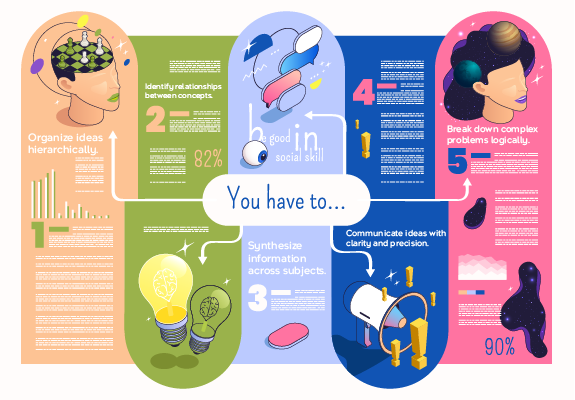
At Be Albright, we train students to use Mind Mapping not just as an activity but as a core cognitive system to:
Organize ideas hierarchically.
Identify relationships between concepts.
Synthesize information across subjects.
Break down complex problems logically.
Communicate ideas with clarity and precision.
This structure of thinking helps enhance memory, analytical thinking skills, and long-term academic confidence.
We believe that strong education should take place inside the school, not after school. Therefore, we design the curriculum to be completed within the school day.
Everything is built-in to the system: IQ Math, Mind Mapping, Thai language, Chinese language, VEX Robotics, Music.
When the school day ends: Children go home confidently, no need to rush to other classes, and no late-night worksheets.
Quality time: Time to rest, play, grow, and spend time with family.
We prepare children for a future world where they must change careers 3–7 times, and for new jobs that do not yet exist today.
Limited due to skills being confined to a specific field.
Highly flexible, skills are broad and applicable.
Must start from scratch if changing fields.
Adapt quickly because they think systematically.
Not proficient.
Proficient due to familiarity with integrated projects.
Less training.
Trained since school.
Must learn more.
Familiar since childhood.
Real Example: A child studying science in a specialized curriculum, if they want to switch to marketing, might take many years to train in communication and marketing skills. But a child studying science in an American curriculum who has previously done projects combining marketing, design, and presentation can switch fields more easily.
At Be Albright, we teach to help each child discover their own voice, purpose, and the courage to shine in their own way.
Knowledge that can be applied, not just memorized.
Life skills and Soft Skills required by the job market.
Confidence in adaptation, no matter what the future choice is.
Key: In the future, stability is not having one career for life, but having the ability to learn new things and confidently switch paths.
Positioning: We use the American Curriculum as the main structure and use Whole Brain Development as the core in designing learning.
Result: Children do not just learn to memorize, but learn to think, understand, and grow confidently.